

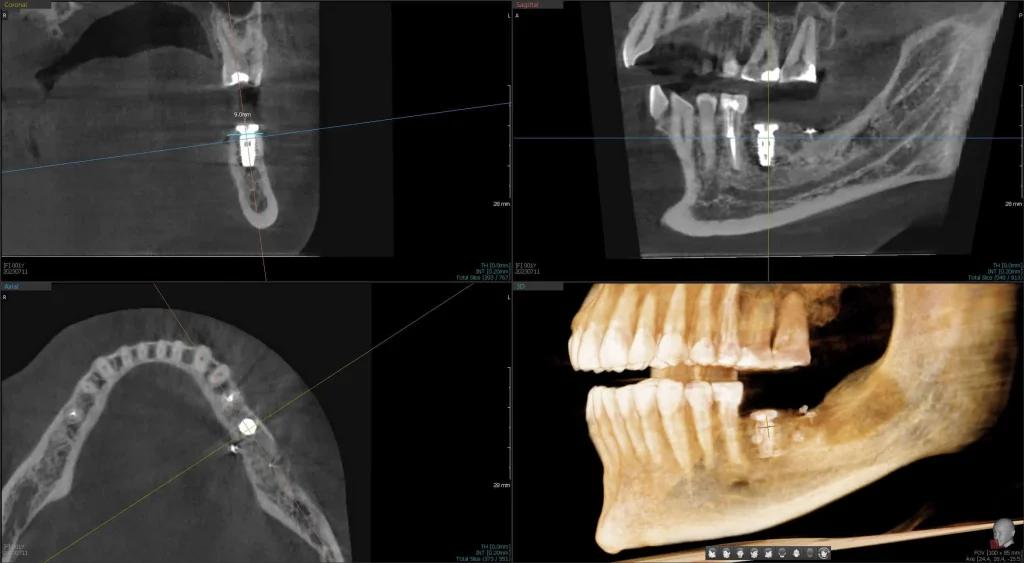

Learn how vertical bone augmentation rebuilds jawbone for stable, long-lasting dental implants.
Discover Our Services
- Implant Dentistry & Oral Surgery
- Full-Arch Rehabilitation (All-on-4 / All-on-6)
- Prosthodontics & Restorative Dentistry
- Aesthetic Dentistry
- Conservative & Endodontic Treatments
- Periodontal Care & Maintenance
- Smile Design & Whitening
- Bone Regeneration & Sinus Lifts
- Digital Diagnostics & Treatment Planning
- Orthodontics
Working Hours :
Rebuilding Bone for Strong and Lasting Dental Implants
When patients lose teeth, they often think the problem ends with the missing tooth. However, one of the most important consequences of tooth loss is something less visible: bone loss in the jaw. Without adequate bone volume, placing dental implants may become difficult or even impossible.
This is where vertical bone augmentation plays a crucial role. This advanced regenerative procedure helps rebuild lost bone height, creating a stable foundation for successful and long-lasting dental implants.
What Is Vertical Bone Augmentation?
Vertical bone augmentation is a specialized surgical procedure used to increase the height of the jawbone in areas where bone has been lost over time.
After a tooth is extracted or lost, the surrounding bone naturally begins to shrink because it is no longer stimulated by chewing forces. In some cases, bone loss becomes so severe that there is insufficient bone to safely support a dental implant.
Vertical bone augmentation aims to regenerate this lost bone, restoring the necessary height and volume to make implant placement possible.
Why Does Bone Loss Happen?
Bone loss in the jaw can occur for several reasons, including:
- Missing teeth for a long period
- Gum disease (periodontitis)
- Dental infections
- Trauma or accidents
- Natural aging and bone resorption
- Wearing removable dentures for many years
The longer a tooth is missing, the greater the risk of progressive bone deterioration.
Who Needs Vertical Bone Augmentation?
Not every implant patient requires bone regeneration. However, vertical bone augmentation may be recommended for patients who:
- Have experienced severe bone loss after tooth extraction
- Have been missing teeth for several years
- Were previously told they are “not suitable” for implants
- Need implant rehabilitation in the upper or lower jaw with insufficient bone height
A detailed clinical evaluation, including 3D CBCT imaging, helps determine whether bone augmentation is necessary before implant placement.
How Is Vertical Bone Augmentation Performed?
Modern implant dentistry offers several advanced techniques for rebuilding bone vertically. The most appropriate method depends on the patient’s anatomy and clinical situation.
1. Guided Bone Regeneration (GBR)
This technique uses bone graft materials and protective membranes to stimulate natural bone growth. The membrane protects the healing area and encourages the body to regenerate bone in a controlled way.
2. Autogenous Bone Grafts
In certain cases, bone may be taken from another area of the patient’s mouth and transferred to the deficient area. Because it uses the patient’s own bone, this method offers excellent biological compatibility.
3. Customized Regenerative Solutions
In more complex situations, advanced technologies and biomaterials may be used to rebuild larger bone defects and prepare the jaw for implant rehabilitation.
At experienced implant centers, treatment is carefully personalized to achieve predictable and long-term results.
Is Vertical Bone Augmentation Painful?
One of the most common concerns patients have is discomfort during the procedure.
The surgery is performed under local anesthesia, and in some cases sedation may also be available for anxious patients. During treatment, patients generally feel no pain.
After surgery, mild swelling or discomfort may occur for a few days, but this is typically manageable with prescribed medications and post-operative care instructions.
Most patients are pleasantly surprised by how comfortable the recovery process is.
Healing Time: How Long Does It Take?
Healing varies depending on the complexity of the case and the amount of bone regenerated.
In most situations, bone healing may take between 4 and 9 months before implants can be safely placed.
Although this may seem like a long process, proper healing is essential to ensure implant stability and long-term success.
Rushing treatment can compromise results, which is why careful planning and patience are important.
What Are the Benefits of Vertical Bone Augmentation?
Vertical bone augmentation offers several important advantages:
Better Eligibility for Dental Implants
Many patients who were previously told they were not candidates for implants can become eligible after bone regeneration.
Improved Aesthetic Results
Adequate bone support helps create a more natural and harmonious smile.
Stronger Implant Stability
Dental implants require sufficient bone support for durability and function.
Long-Term Oral Health
Rebuilding lost bone contributes to improved oral function and better overall dental rehabilitation.
Success Rates and Predictability
When performed by experienced professionals using modern techniques, vertical bone augmentation has high success rates.
Success depends on several factors, including:
- The patient’s overall health
- Oral hygiene habits
- Smoking status
- Bone quality and healing response
- Proper surgical planning
A personalized treatment plan significantly increases predictability and long-term outcomes.
Frequently Asked Questions (FAQ)
Can I get dental implants without enough bone?
In many cases, yes. Bone augmentation procedures can often rebuild the necessary bone structure for implant placement.
Is vertical bone augmentation safe?
Yes, when performed by experienced implant specialists using modern regenerative techniques.
How long after bone augmentation can implants be placed?
Typically between 4–9 months, depending on healing and bone formation.
Is the procedure permanent?
The regenerated bone can remain stable long-term when supported by well-maintained dental implants and proper oral hygiene.
Restore Your Smile with Confidence
Lack of bone does not necessarily mean giving up on dental implants. Thanks to advances in regenerative dentistry, vertical bone augmentation can restore the foundation needed for a stable, functional, and beautiful smile.
At IMPLADENT ALBANIA, every treatment plan is carefully designed to provide safe, predictable, and personalized solutions for patients seeking advanced implant rehabilitation.
Ricostruire l’Osso per Impianti Dentali Stabili e Duraturi
Quando si perdono uno o più denti, spesso si pensa che il problema sia limitato allo spazio vuoto lasciato dal dente mancante. In realtà, una delle conseguenze più importanti della perdita dentale è la perdita di osso mascellare o mandibolare.
Senza una quantità adeguata di osso, il posizionamento degli impianti dentali può diventare difficile o addirittura impossibile. In questi casi, l’aumento osseo verticale rappresenta una soluzione avanzata e altamente efficace.
Che Cos’è l’Aumento Osseo Verticale?
L’aumento osseo verticale è una procedura chirurgica rigenerativa utilizzata per aumentare l’altezza dell’osso mascellare o mandibolare nelle aree in cui si è verificato un riassorbimento osseo.
Dopo la perdita o l’estrazione di un dente, l’osso tende naturalmente a ridursi perché non riceve più gli stimoli della masticazione. Col tempo, questa riduzione può rendere impossibile l’inserimento sicuro di impianti dentali.
L’obiettivo dell’aumento osseo verticale è ricostruire il volume osseo necessario per supportare impianti dentali stabili e duraturi.
Perché Si Verifica la Perdita di Osso?
La perdita ossea può dipendere da diversi fattori:
- Assenza di denti per lunghi periodi
- Parodontite (malattia gengivale avanzata)
- Infezioni dentali
- Traumi o incidenti
- Invecchiamento naturale e riassorbimento osseo
- Utilizzo prolungato di protesi mobili
Più a lungo manca un dente, maggiore sarà il rischio di perdita ossea progressiva.
Chi Ha Bisogno di un Aumento Osseo Verticale?
Non tutti i pazienti candidati agli impianti necessitano di rigenerazione ossea. Tuttavia, questa procedura può essere consigliata a chi:
- Presenta una grave perdita di osso dopo estrazioni dentali
- Ha denti mancanti da molti anni
- È stato precedentemente informato di non essere idoneo agli impianti
- Necessita di riabilitazione implantare con insufficiente altezza ossea
Una valutazione accurata tramite TAC Cone Beam 3D (CBCT) consente di stabilire il trattamento più appropriato.
Come Si Esegue l’Aumento Osseo Verticale?
La moderna implantologia offre diverse tecniche per rigenerare l’osso in altezza.
1. Rigenerazione Ossea Guidata (GBR)
Questa tecnica utilizza innesti ossei e membrane protettive per favorire la crescita naturale dell’osso.
2. Innesti di Osso Autologo
In alcuni casi, l’osso viene prelevato direttamente dal paziente e trasferito nell’area da ricostruire, garantendo elevata biocompatibilità.
3. Soluzioni Rigenerative Avanzate
Nei casi più complessi, biomateriali e tecnologie moderne permettono di affrontare deficit ossei importanti e preparare il paziente agli impianti.
L’Intervento È Doloroso?
L’intervento viene eseguito in anestesia locale, e per i pazienti più ansiosi può essere disponibile anche la sedazione.
Durante la procedura non si avverte dolore. Nei giorni successivi possono comparire lieve gonfiore o fastidio, generalmente controllabili con terapia farmacologica prescritta dal medico.
Molti pazienti riferiscono un recupero più semplice del previsto.
Tempi di Guarigione
La guarigione dipende dalla complessità del caso e dalla quantità di osso da rigenerare.
Generalmente, possono essere necessari da 4 a 9 mesi prima di procedere con il posizionamento degli impianti dentali.
Attendere una corretta maturazione dell’osso è fondamentale per ottenere risultati stabili nel tempo.
Quali Sono i Benefici?
Maggiore Possibilità di Ricevere Impianti
Anche pazienti precedentemente esclusi dagli impianti possono diventare candidati idonei.
Migliore Estetica del Sorriso
Una base ossea adeguata migliora il risultato estetico finale.
Stabilità Implantare Superiore
Gli impianti necessitano di un supporto osseo solido per durare nel tempo.
Salute Orale a Lungo Termine
La rigenerazione ossea migliora funzione, stabilità e qualità della riabilitazione dentale.
Domande Frequenti (FAQ)
Posso fare impianti se ho poco osso?
In molti casi sì, grazie alle moderne tecniche di rigenerazione ossea.
L’aumento osseo verticale è sicuro?
Sì, se eseguito da professionisti esperti in implantologia avanzata.
Dopo quanto tempo posso inserire gli impianti?
Generalmente tra 4 e 9 mesi, in base alla guarigione.
I risultati sono permanenti?
Con corretta manutenzione e buona igiene orale, i risultati possono essere duraturi nel tempo.
Ritrova il Tuo Sorriso con Sicurezza
La mancanza di osso non significa necessariamente rinunciare agli impianti dentali. Grazie alle moderne tecniche di rigenerazione, l’aumento osseo verticale può creare una base stabile per un sorriso funzionale, estetico e duraturo.
Presso IMPLADENT ALBANIA, ogni piano di trattamento viene personalizzato per offrire soluzioni implantari avanzate, sicure e prevedibili.
Frequently asked questions
Yes, the payments made at the clinic are tax-deductible in Italy and can be claimed as a tax deduction in accordance with Law 7/30, in compliance with the current regulations.
Impladent offers integrated care across implant dentistry and oral surgery, orthodontics, aesthetic dentistry, prosthodontics, restorative treatments, periodontal care, endodontics, bone regeneration, and digital diagnostics, so your treatment can be coordinated by one clinical team.
Every case starts with a thorough consultation and diagnostic evaluation, including clinical examination and radiographic analysis. Based on this assessment, we develop a personalised treatment plan tailored to your needs, clinical conditions, and timeline.
Yes. Treatments are performed using high-quality, certified materials and are supported by a full treatment guarantee, with clear documentation and aftercare guidance.
Yes. Impladent provides full-arch rehabilitation solutions, planned through comprehensive diagnostics and a structured treatment sequence to restore function and aesthetics with predictable outcomes.
Education and prevention are a key part of our approach. Patients receive ongoing support for oral hygiene and maintenance, including tailored aftercare and follow-ups designed to protect results long-term.
